Frankenstein Craft for Kids: Halloween Foam Experiment
This post may contain affiliate links – please read my disclosure statement.
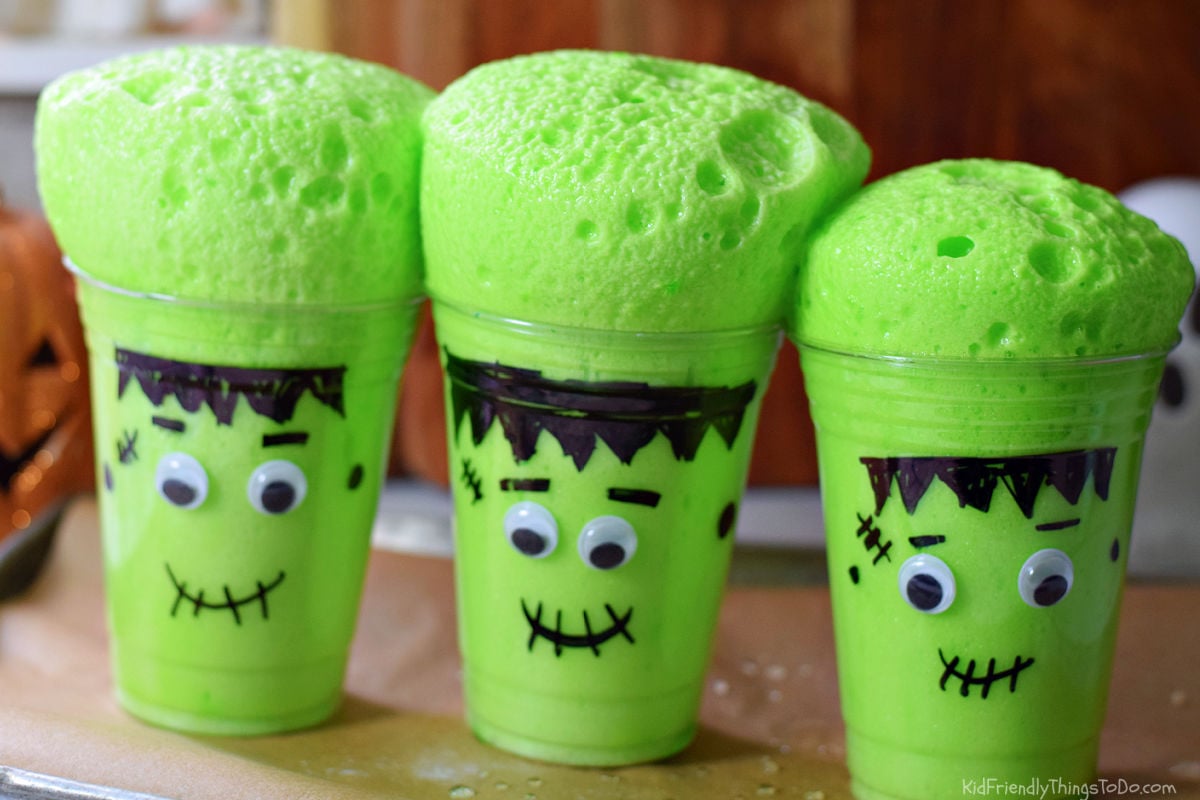
I tested this Halloween baking soda and vinegar experiment three times before getting the tall green foam crowns I wanted for my Frankenstein cups. My first attempt fizzed, and the second reacted more strongly, but neither produced that thick foam that stood above the rim.
The breakthrough came when I increased the liquid egg whites. With the baking soda amount unchanged from my second attempt, the extra egg whites helped create the bubbly green dome I had been trying to achieve.
When I showed my son, he called it elephant toothpaste! It certainly has that foamy look, although it uses a different reaction. I also learned to have the vinegar measured and ready—and to work with one cup at a time instead of trying to pour into three while watching them all react.
Why You’ll Love This Baking Soda and Vinegar Experiment
- Craft plus science. Decorate a Frankenstein face, then watch the green foam rise.
- An instant reaction. The bubbling begins as soon as you add the vinegar.
- Everyday supplies. The experiment uses baking soda, white vinegar, liquid egg whites, and food coloring.
- A tested method. I worked through three attempts to get the standing foam shown in my photos.
- Easy to repeat. I rinsed out my cups between attempts and started again with fresh materials.
Supplies for This Frankenstein Foam Experiment
Experiment Materials
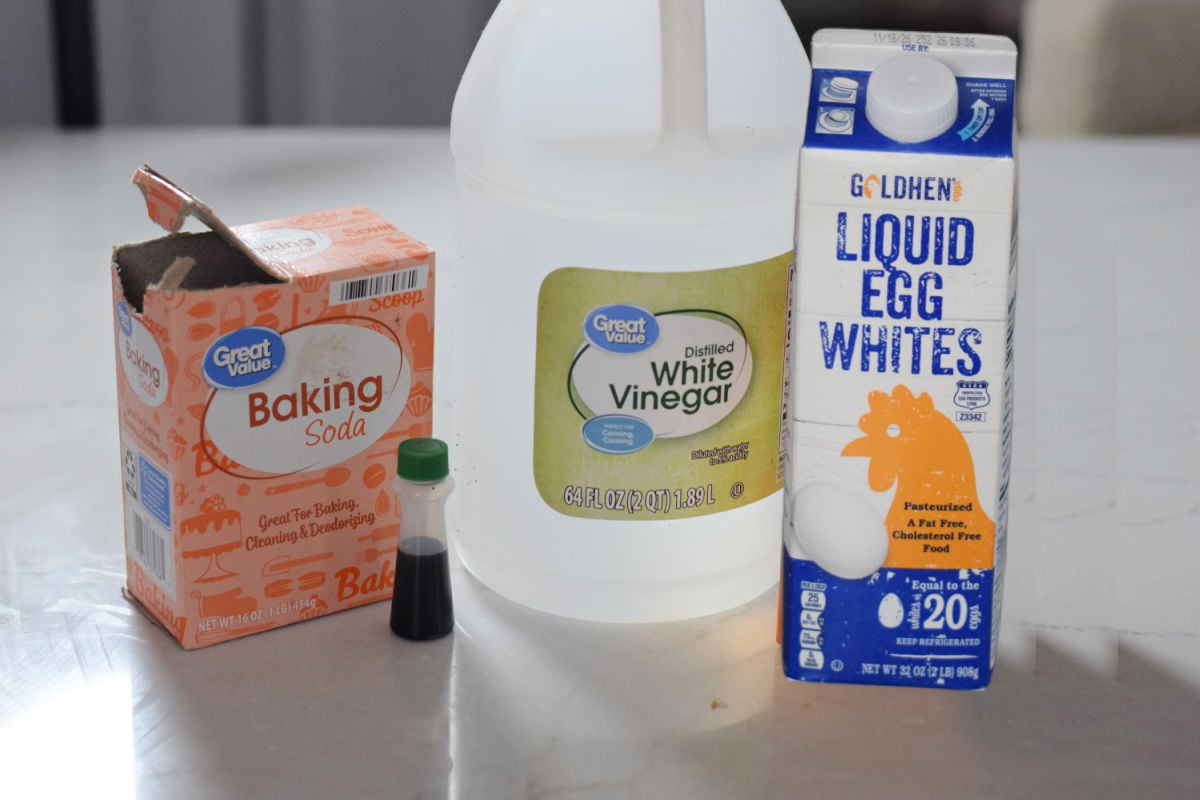
- Baking soda
- Liquid egg whites – Egg beaters don’t really work. I think it is because they have too many added ingredients.
- Distilled white vinegar
- Green food coloring
The exact amounts for one cup are in the printable tutorial card below.
| Material | What It Does |
|---|---|
| Baking soda | Reacts with the vinegar to release carbon dioxide gas. |
| White vinegar | Starts the bubbling reaction when added to the baking soda mixture. |
| Liquid egg whites | Help trap the gas bubbles into a foam that can stand above the cup. |
| Green food coloring | Gives the foam its Frankenstein-green color. |
The baking soda and vinegar create the gas; egg-white proteins help hold the bubbles together into a foam dome.
Equipment and Decorating Supplies
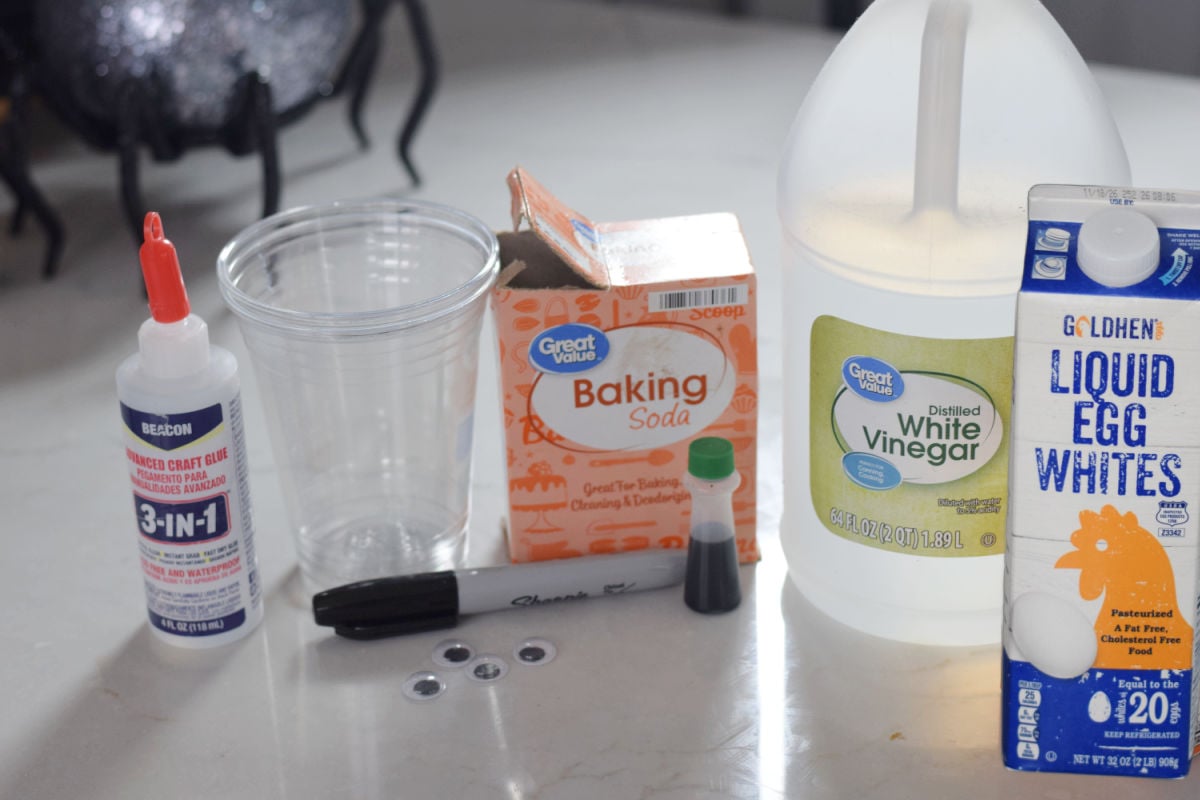
- 16 oz. Clear plastic cup
- Black permanent marker
- Googly eyes
- Craft glue for attaching the eyes
- Measuring spoons and a measuring cup
- Fork or spoon for stirring
- Small cup for holding the measured vinegar
- Rimmed baking tray to catch spills
The craft glue is only for decorating the outside of the cup. It does not go into the experiment mixture. This activity is for observing, not eating.
Make the Frankenstein Craft
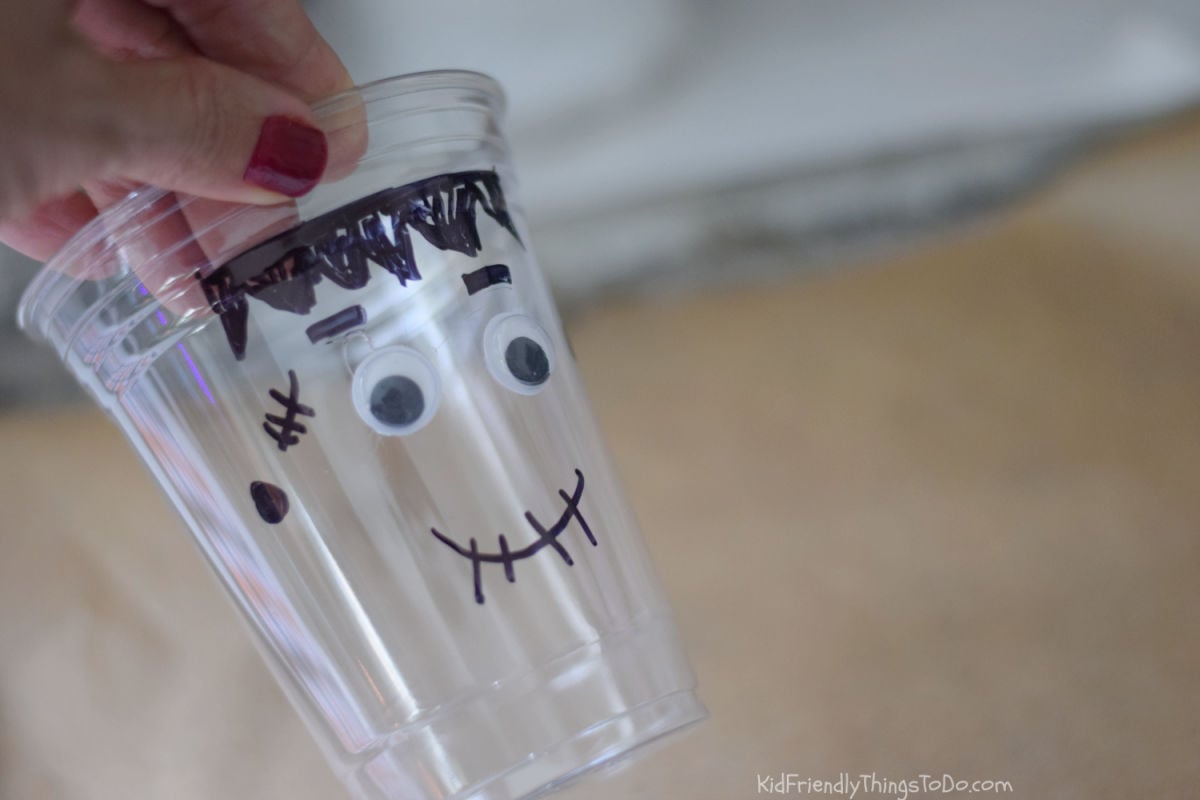
Step 1: Decorate the cup.
Draw jagged black hair near the top of the clear cup. Add eyebrows, a stitched smile, and a few stitches on the cheek or forehead.
Glue googly eyes onto the outside of the cup and allow the glue to dry before starting the experiment.
Step 2: Set up your work area.
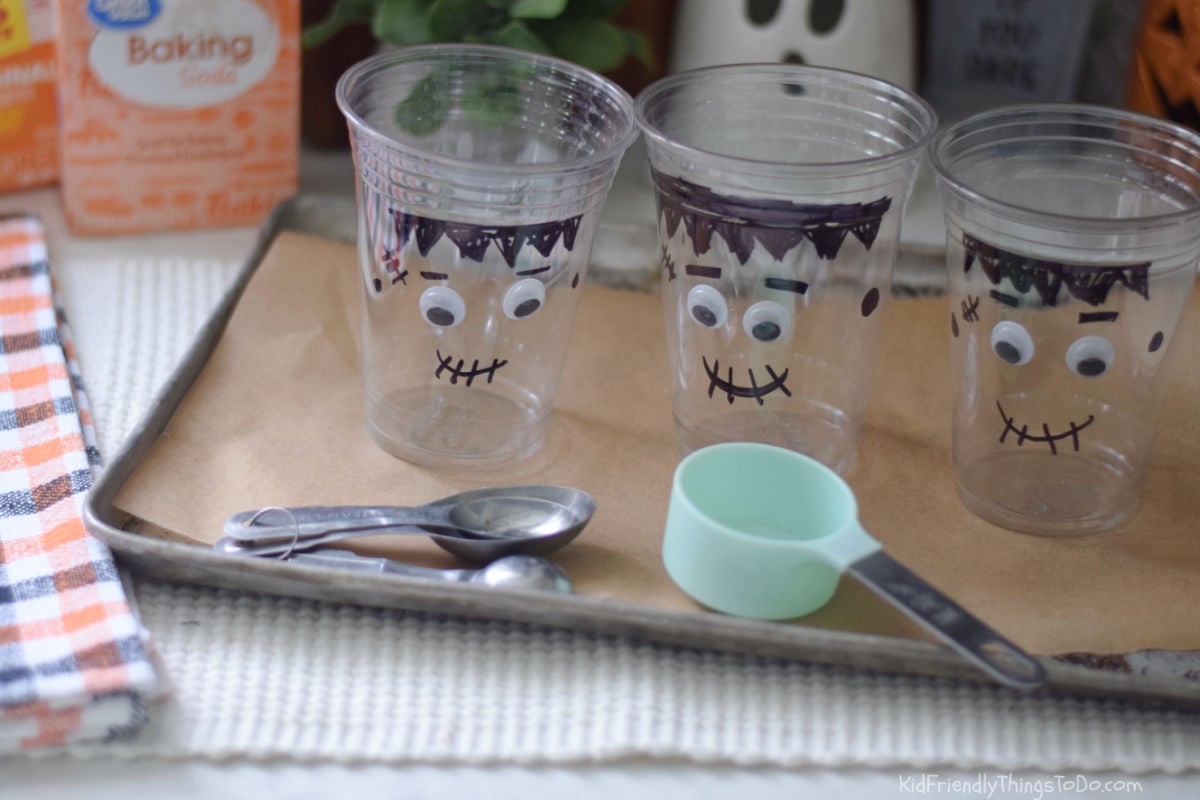
Place the decorated cup on a rimmed baking tray. Gather your measuring tools and stirring utensil so everything is within reach.
The tray matters! My foam initially stood above the cups, but eventually it slumped and spilled down the sides.
How to Do the Baking Soda and Vinegar Experiment
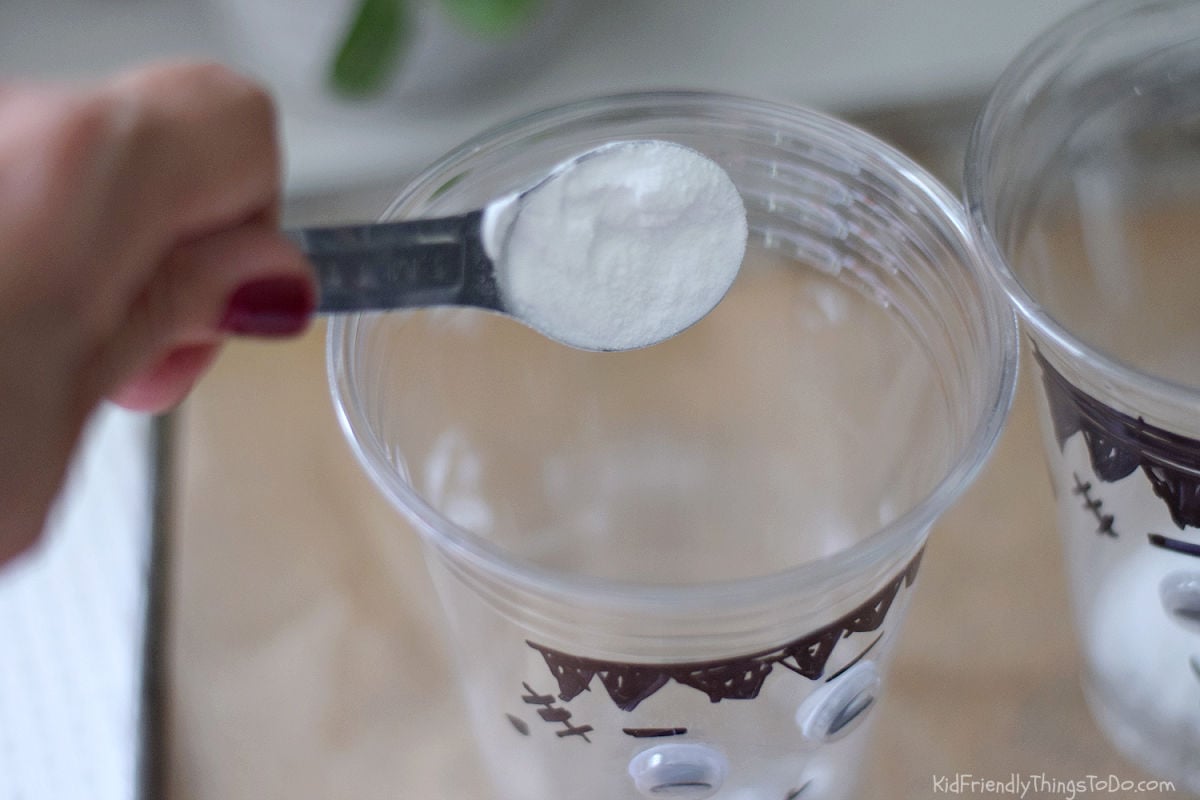
Step 3: Add the baking soda and liquid egg whites.
Add the baking soda and liquid egg whites to the decorated cup, using the amounts in the tutorial card.
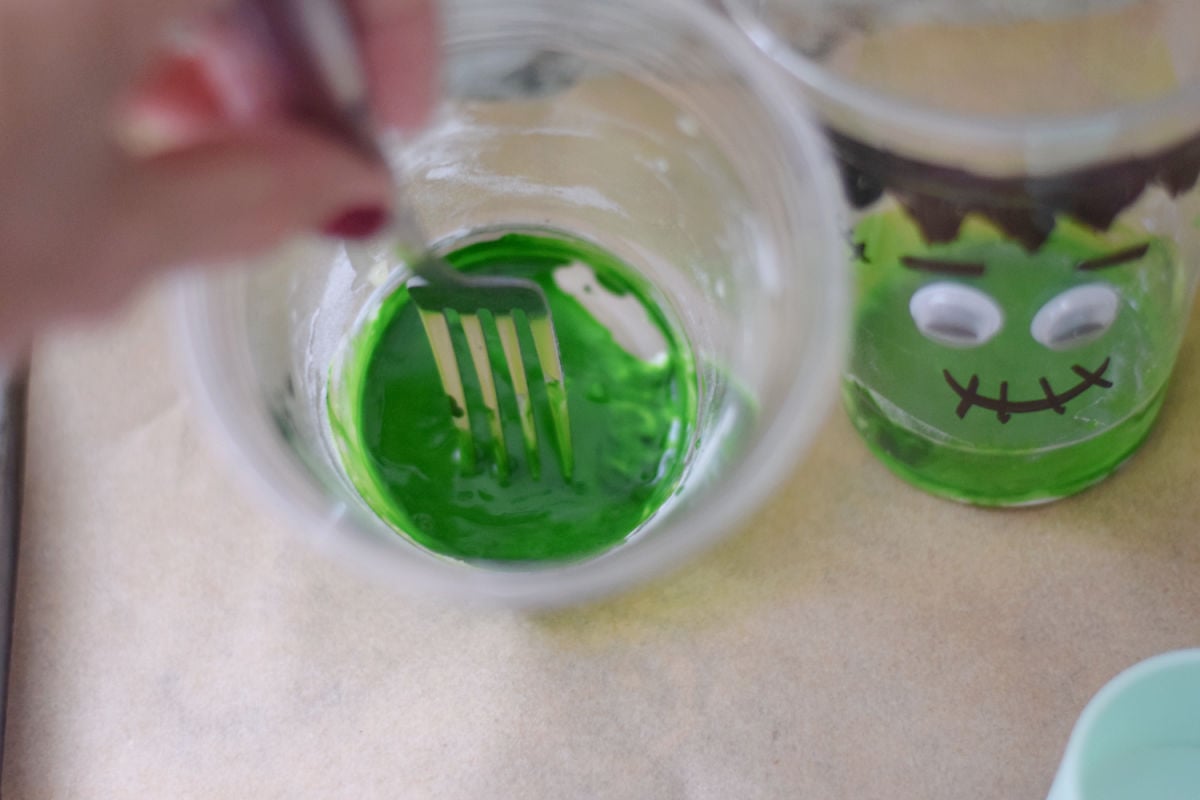
Step 4: Add the green food coloring and stir.
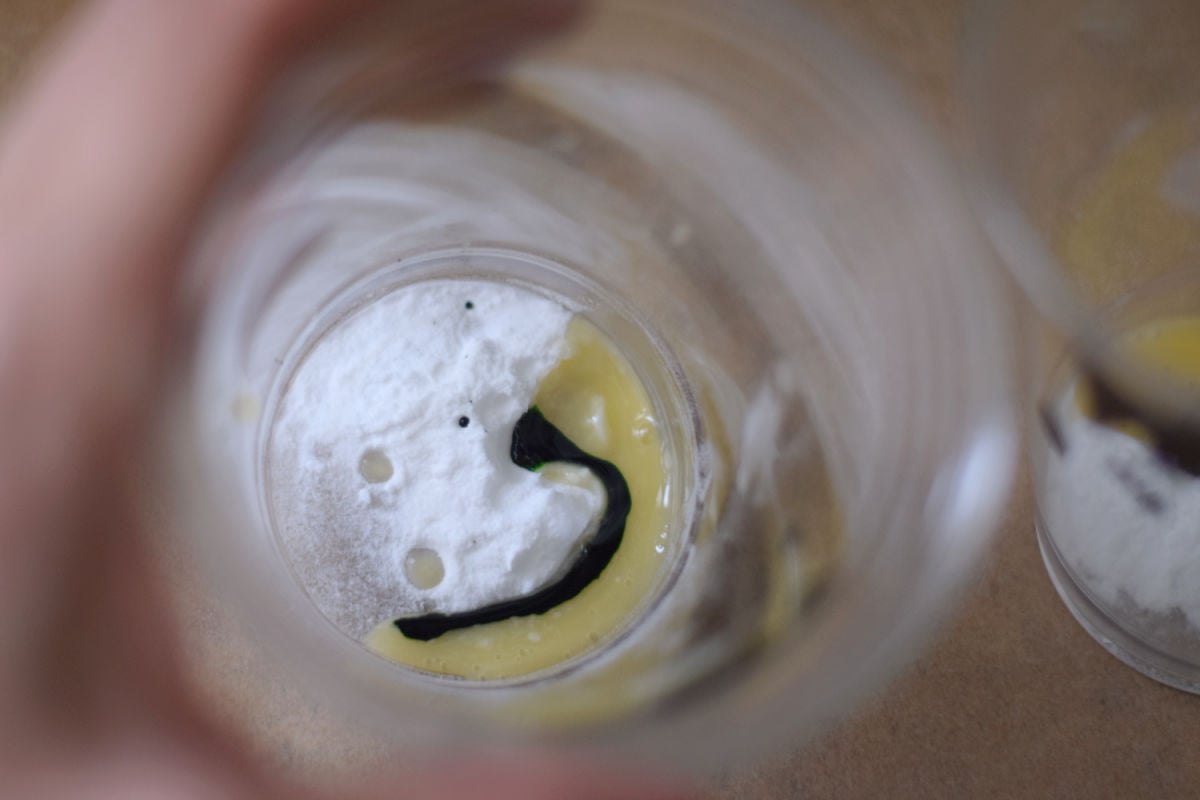
Add a few drops of green food coloring. Stir the baking soda, egg whites, and coloring together with a fork or spoon.
Keep the vinegar separate until you are ready to watch the reaction.
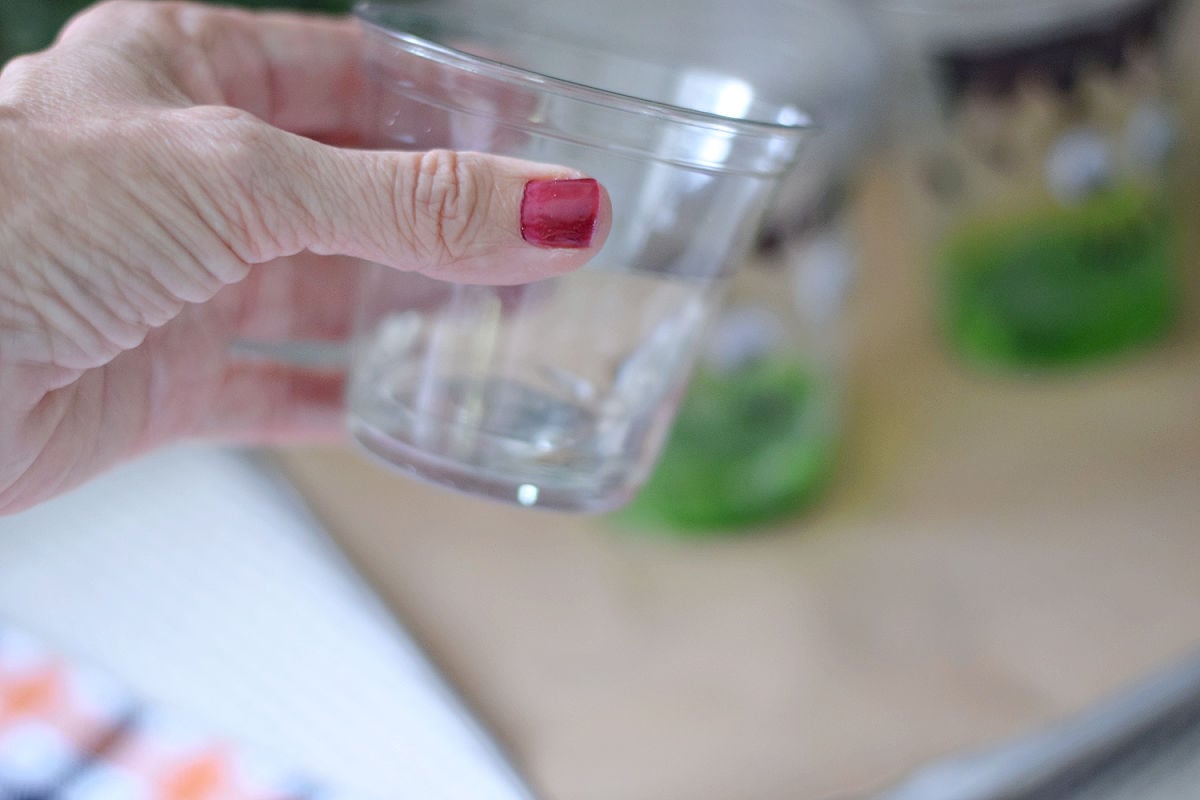
Step 5: Measure the vinegar before starting.
Measure the vinegar into a separate small cup. Have everyone watching before you pour it into the Frankenstein cup—the reaction begins immediately.
Step 6: Pour in the vinegar and watch the foam rise.
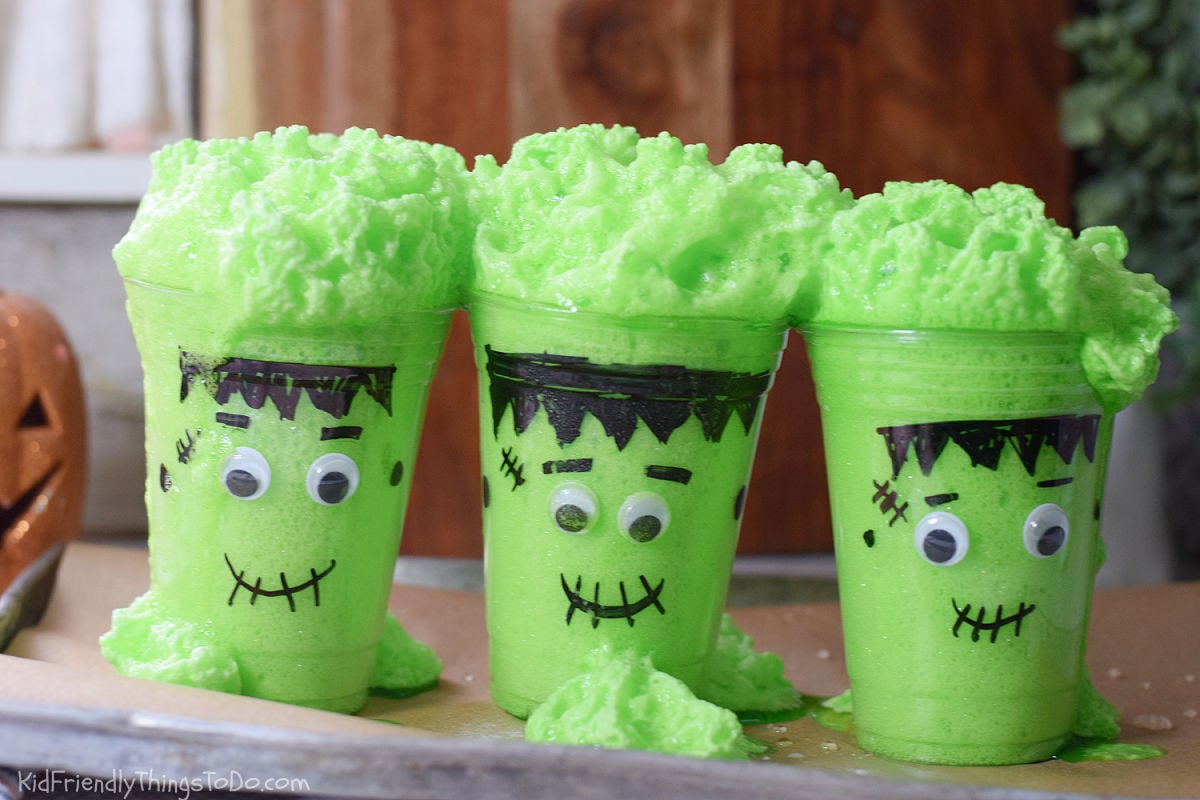
Pour the measured vinegar into the mixture, aiming to get it all inside the cup. Watch the green foam expand and form a bubbly crown above the rim.
For several cups, repeat with one cup at a time so you can watch each reaction.
Step 7: Keep watching as the foam changes.
The foam crown does not stay upright forever. Eventually, it starts to slump and spill down the sides of the cup onto the tray.
How Does This Foam Science Experiment Work?
Baking soda and vinegar react to produce carbon dioxide gas. Those gas bubbles make the mixture expand.
The liquid egg whites give those bubbles something to hold onto. Their proteins help form films around the bubbles, creating the foam dome you see above the cup. www.kiwico.com
In my tests, increasing the liquid egg whites was the change that finally gave me the standing foam I wanted. The food coloring makes that foam green so it becomes part of the Frankenstein design.
Is Frankenstein Foam Elephant Toothpaste?
When my son saw this experiment, he called it elephant toothpaste because of the thick foam.
Traditional elephant toothpaste uses hydrogen peroxide, a catalyst such as yeast, and dish soap. It releases oxygen gas, which the soap traps into foam. This Frankenstein activity uses baking soda and vinegar to release carbon dioxide, with egg whites helping hold the bubbles together. www.sciencebuddies.org
Melissa’s Tips for This Baking Soda and Vinegar Experiment
- Use the tested liquid egg-white amount. My second attempt reacted strongly but did not form the foam crown I wanted. Increasing the egg whites made the difference in my final attempt.
- Measure before you pour. Once the vinegar goes in, the reaction starts immediately.
- Start with one Frankenstein cup. I tried to manage three at once, but one cup is easier to pour into and watch.
- Aim the vinegar inside the cup. Some of mine splashed outside the third cup, and I noticed that cup had a shorter foam crown.
- Keep the tray underneath. The standing foam eventually spills down the sides.
- Use fresh materials for another attempt. I rinsed my cups between tests, then started over.
- Watch right away. Have your audience—and your camera, if you want pictures—ready before adding the vinegar.
Frankenstein Foam Experiment FAQs
Why Did My Mixture Fizz Without Making a Tall Foam Crown?
That happened during my early tests. Using more baking soda gave me a stronger reaction, but increasing the liquid egg whites was what finally produced the standing foam. Start with the tested amounts and cup size in the tutorial card.
Can I Leave Out the Egg Whites?
Baking soda and vinegar will still produce gas bubbles, but the egg whites help hold those bubbles together into the foam dome. Leaving them out changes the effect this activity is designed to create. www.kiwico.com
Why Is One Cup’s Foam Crown Shorter Than the Others?
In my final test, some vinegar splashed outside the third cup while I hurried to pour into all three. That cup formed a shorter crown. Measure carefully and pour one cup at a time to make the setup easier to manage.
Does the Foam Stay Standing?
No. Mine initially formed tall crowns above the rims, then began to slump and spill down the sides. Keep the cups on a rimmed tray throughout the activity.
Can I Reuse the Frankenstein Cups?
I rinsed out my cups and reused them during my three tests. Start each new attempt with fresh experiment materials, and check that the decorations are still attached.
More Halloween Science Activities and Crafts
For another activity using baking soda and vinegar, try my Baking Soda and Vinegar Balloon Experiment. You can draw a ghost face on the balloon for a Halloween version.
For more seasonal fun, try:
- How to Catch a Spiderweb
- Halloween Tissue Paper Lanterns
- Frankenstein Grape Cups for a separate Halloween snack
- DIY Lava Lamp
- Halloween activities for preschoolers
Watch the Frankenstein Foam Science Experiment
I’d Love to Hear From You

If you make this craft, I’d love to hear what you think! Please leave a star rating and comment below to let me know how it turned out. I love hearing from you, and your ratings help other readers find and enjoy the craft, too!
Frankenstein Foam: Baking Soda and Vinegar Science Experiment
Equipment
- Clear 16 oz. plastic cup
- Black permanent marker
- measuring spoons
- measuring cup
- Fork or spoon
- Small cup for the measured vinegar
- Rimmed baking tray
Materials
- 1 tablespoon baking soda
- 1½ tablespoons liquid egg whites
- A few drops green food coloring
- ¼ cup distilled white vinegar
- Googly eyes
- Craft glue for attaching the eyes to the outside of the cup
Instructions
- Draw Frankenstein hair, eyebrows, a stitched mouth, and stitches on the outside of the clear cup.
- Glue on the googly eyes and allow the glue to dry.
- Place the decorated cup on a rimmed baking tray.
- Add the baking soda, liquid egg whites, and green food coloring to the cup. Stir together with a fork or spoon.
- Measure the vinegar into a separate small cup.
- When everyone is ready to watch, pour the vinegar into the Frankenstein cup. The reaction starts immediately.
- Watch the foam rise above the rim. Leave the cup on the tray as the foam eventually slumps and spills down the sides.
Notes
- Amounts are for one cup.
- Use liquid egg whites, as used in the successful test.
- For multiple cups, prepare each mixture separately and add the vinegar to one cup at a time.
- Craft glue belongs only on the outside of the cup.
- This is a science activity, not a food recipe.